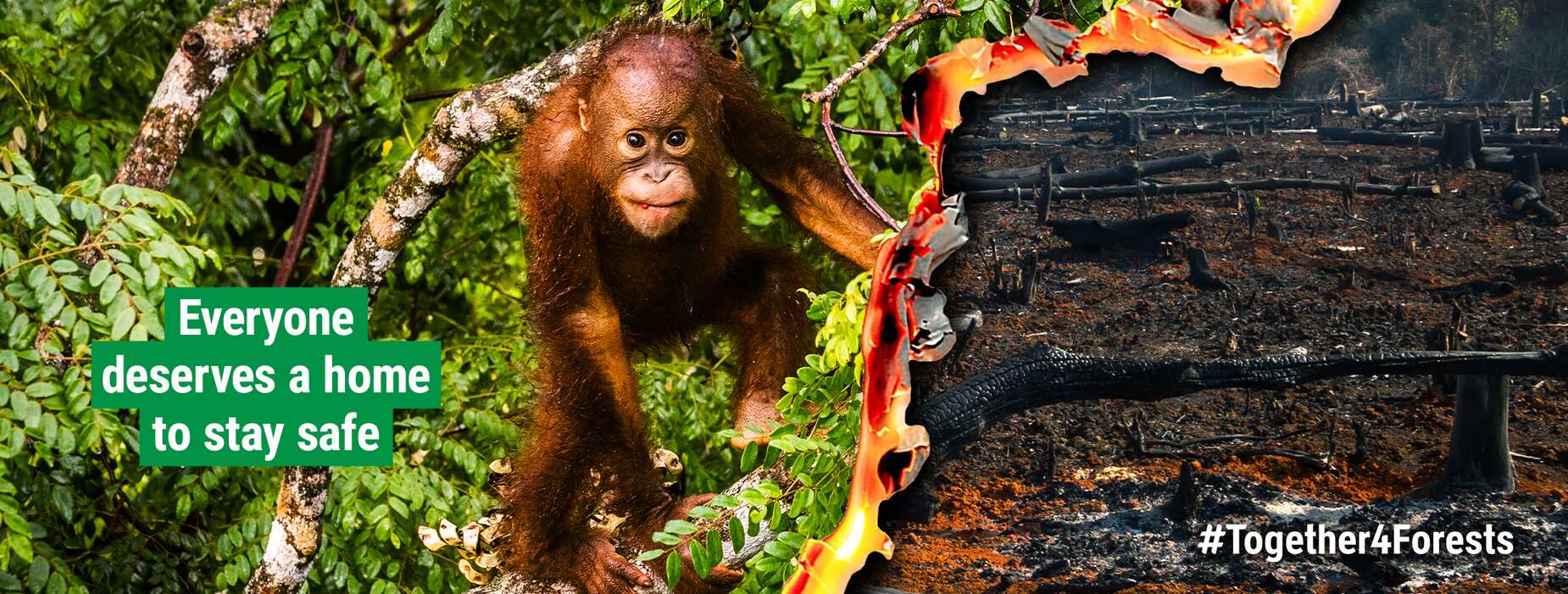
Section I: The problems of deforestation and forest degradation
In this section, we will ask you for your opinion about the issues of deforestation and forest degradation. This section includes questions about the magnitude of the problems, the drivers of deforestation and forest degradation, and the role of the European Union in reducing deforestation and forest degradation associated with products placed on the EU market.
Q1.1 To what extent do you think an EU-level intervention on EU consumption of goods would reduce global deforestation and forest degradation?
-
Not at all
-
Very little
-
Somewhat
-
Much
-
Very much
-
I do not know
Q1.2 In your opinion, to what extent do each of the economic sectors below contribute to deforestation and forest degradation through the goods and services they provide (on the EU market)? Please rate each option below on a scale of 1 to 5, with 1 as no contribution at all, 2 as a low level of contribution, 3 as a moderate level of contribution, 4 as a high level of contribution, and 5 as a very high level of contribution.
|
|
1 |
2 |
3 |
4 |
5 |
I do not know |
|
Animal-based food and non-food (e.g. wool, leather) sector
|
|
|
|
|
|
|
|
Chemicals
|
|
|
|
|
|
|
|
Construction/infrastructure
|
|
|
|
|
|
|
|
Energy/biofuels
|
|
|
|
|
|
|
|
Manufacturing
|
|
|
|
|
|
|
|
Other services (e.g. education, hospitals, advisory services, ICT)
|
|
|
|
|
|
|
|
Textiles
|
|
|
|
|
|
|
|
Mining/oil and gas
|
|
|
|
|
|
|
|
Plant-based food and feed sector
|
|
|
|
|
|
|
|
Tourism
|
|
|
|
|
|
|
|
Transport
|
|
|
|
|
|
|
|
Other
|
|
|
|
|
|
|
Q1.2.1 If other, please specify sector(s)
Q1.3 In your opinion, to what extent do the following commodity groups contribute to deforestation and forest degradation, due to their consumption within the EU market? Please rate each option below on a scale of 1 to 5, with 1 as no contribution at all, 2 as a low level of contribution, 3 as a moderate level of contribution, 4 as a high level of contribution, and 5 as a very high level of contribution.
|
|
1 |
2 |
3 |
4 |
5 |
I do not know |
|
Animal-based products (e.g. animal fat, blood, flesh, milk, eggs, skin, wool, and products made from these raw materials)
|
|
|
|
|
|
|
|
Cereals (e.g. wheat, maize, rice, barley, oats, rye, sorghum)
|
|
|
|
|
|
|
|
Fodder crops (i.e. crops cultivated primarily for animal feed)
|
|
|
|
|
|
|
|
Fruits and vegetables
|
|
|
|
|
|
|
|
Industrial crops (e.g. rubber, tobacco, fibre crops)
|
|
|
|
|
|
|
|
Mining products (e.g. precious metals, ores, coal)
|
|
|
|
|
|
|
|
Oil and gas
|
|
|
|
|
|
|
|
Oil crops (e.g. soybeans, palm, rapeseed, sunflower, canola, mustard, flax, jatropha, coconut, hemp)
|
|
|
|
|
|
|
|
Stimulants (coffee, cocoa, tea)
|
|
|
|
|
|
|
|
Sugar crops
|
|
|
|
|
|
|
|
Wood and wood-based commodities, including pulp and wood pellets
|
|
|
|
|
|
|
|
Other
|
|
|
|
|
|
|
Q1.3.1 If other, please specify commodity group(s)
Q1.4 In your opinion, to what extent do the following factors contribute to the consumption (within the EU) of products linked to deforestation and forest degradation? Please rate each option below on a scale of 1 to 5, with 1 as no contribution at all, 2 as a low level of contribution, 3 as a moderate level of contribution, 4 as a high level of contribution, and 5 as a very high level of contribution.
|
|
1 |
2 |
3 |
4 |
5 |
I do not know |
|
Lack of awareness about the contribution of specific products or companies to deforestation
|
|
|
|
|
|
|
|
Lack of agreed regulations/standards to define “deforestation-free” products or commodities
|
|
|
|
|
|
|
|
Lack of availability of products from “clean” supply chains
|
|
|
|
|
|
|
|
Lack of reliability of products marketed as forest-friendly or deforestation-free
|
|
|
|
|
|
|
|
The price paid for such products does not reflect the negative social/environmental externalities caused by the impact of their production on forests
|
|
|
|
|
|
|
|
Regulations do not restrict the sale of goods associated with deforestation
|
|
|
|
|
|
|
|
Inaccurate or insufficient reporting about the impact of business activities on forests
|
|
|
|
|
|
|
|
Citizens cannot afford to buy deforestation-free products, which are marketed at higher prices
|
|
|
|
|
|
|
|
Other
|
|
|
|
|
|
|
Q1.4.1 If other, please specify factor(s)
Q1.5 In your opinion, to what extent do the following problems contribute to deforestation and forest degradation? Please rate each option below on a scale of 1 to 5, with 1 as no contribution at all, 2 as a low level of contribution, 3 as a moderate level of contribution, 4 as a high level of contribution, and 5 as a very high level of contribution.
|
|
1 |
2 |
3 |
4 |
5 |
I do not know |
|
Absence of sound policies at the global level, contributing to deforestation and forest degradation
|
|
|
|
|
|
|
|
Absence of sound policies at the EU level that minimise the contribution to deforestation and forest degradation
|
|
|
|
|
|
|
|
Absence of sound policies at the national/sub-national level that minimise the contribution to deforestation and forest degradation in EU Member States
|
|
|
|
|
|
|
|
Absence of sound policies at the national/sub-national level that minimise the contribution to deforestation and forest degradation in non-EU countries
|
|
|
|
|
|
|
|
Lack of enforcement of existing policies in EU Member States
|
|
|
|
|
|
|
|
Lack of enforcement of existing policies in non-EU countries
|
|
|
|
|
|
|
|
Lack of investment in sustainable land management in countries experiencing deforestation and forest degradation in EU Member States
|
|
|
|
|
|
|
|
Lack of investment in sustainable land management in countries experiencing deforestation and forest degradation in non-EU countries
|
|
|
|
|
|
|
|
Corruption in public institutions in EU Member States
|
|
|
|
|
|
|
|
Corruption in public institutions in non-EU countries
|
|
|
|
|
|
|
|
Lack of interest and/or political leadership on the issue in EU Member States
|
|
|
|
|
|
|
|
Lack of interest and/or political leadership on the issue in non-EU countries
|
|
|
|
|
|
|
|
Poverty, uncertain land tenure, lack of resources and other problems in countries experiencing deforestation and forest degradation
|
|
|
|
|
|
|
|
Other
|
|
|
|
|
|
|
Q1.5.1 If other, please specify problem(s)
Section II: Responsibility for decision-making
The following question aims to gather your views on the level(s) of authority that should be responsible for tackling deforestation and forest degradation linked to EU consumption.
Q2.1 At what level of authority should measures tackling EU-driven deforestation and forest degradation be designed and implemented (i.e. at what level would they be most effective)?
Multiple choice question
-
Local/sub-national in EU Member States
-
National in EU Member States
-
EU level
-
International
-
I do not know
Section III: Potential demand-side measures and their impacts
The following questions seek your opinion on the nature and scale of potential measures to curb deforestation and forest degradation associated with the European Union’s footprint. The proposed measures include a variety of regulatory and non-regulatory policy options.
Q3.1 From a consumer’s perspective, how would information on the deforestation and forest degradation impact of the products and services you purchase influence your purchasing decisions?
-
Not at all
-
Not much
-
Neutral
-
Somewhat
-
Very much
-
I do not know
Q3.2 Taking into account costs and benefits, which range of products linked to deforestation and forest degradation should, in your view, be covered by the future EU policy measures?
-
A large number of products including all (or nearly all) that have a potential impact on deforestation
-
A reduced number of products focusing on those that have the most impact
-
I do not know
Q3.3 In your view, what kind of issues related to the origin of products should future EU measures aim to tackle?
-
Their legality, understood as their compliance with the legal requirements of their country of origin as relates to forestry and land-use change
-
Their forest-related sustainability, understood as their compliance with EU-determined requirements (compliant with World Trade Organization rules and building on international commitments) as relates to forestry and land-use change based on an EU definition of “deforestation-free”
-
Both their legality and their forest-related sustainability, as defined above
-
I do not know
-
Other
Q3.3.1 If you selected both their legality and forest-related sustainability, please indicate how this could be achieved, in your view
Q3.3.2 If you selected other, please specify the issue(s)
Q3.4 What kind of forests should be prioritised by the measures to minimise environmental damages from deforestation and forest degradation? Please rate each on a scale of 1 to 5, with 1 representing not at all important and 5 representing very important.
|
|
1 |
2 |
3 |
4 |
5 |
I do not know |
|
Primary forests (defined as "naturally regenerated forests of native species, where there are no clearly visible indications of human activities and the ecological processes are not significantly disturbed")
|
|
|
|
|
|
|
|
Other naturally regenerated forests (i.e. a naturally regenerated forest where there are clearly visible indications of human activities)
|
|
|
|
|
|
|
|
Plantation forests (defined as “a forest that at maturity is predominantly composed of trees established through planting and/or deliberate seeding”)
|
|
|
|
|
|
|
|
Other (please indicate which)
|
|
|
|
|
|
|
Q3.4.1 If other, please indicate the kind of forest(s)
Q3.5 Do you think that forest clearances (for example, cutting forests to replace them with crop plantations) in one location can be compensated by tree planting in another location for the purpose of assessing whether a product is deforestation-free?
-
Yes
-
No
-
Only to some extent
-
Only for specific types of forests (please indicate which)
-
I do not know
Q3.6 From the list below, which measures are the most suitable to address the issue of deforestation and forest degradation associated with EU consumption? Note that some of the measures presented below are complementary and could be combined. Please rate each measure on a scale of 1 to 5, 1 representing not suitable at all, 2 representing somewhat not suitable, 3 representing neutral, 4 representing somewhat suitable, 5 representing completely suitable.
|
|
1 |
2 |
3 |
4 |
5 |
I do not know |
|
A deforestation-free requirement or standard that commodities or products in their product category must comply with to be placed on the EU market (and consequently a prohibition, in line with EU international commitments, of the placing on the market of commodities that do not comply with those standards)
|
|
|
|
|
|
|
|
Voluntary labelling (e.g. similar to organic labels for organic products)
|
|
|
|
|
|
|
|
Mandatory labelling (e.g. similar to nutritional information labels on food products)
|
|
|
|
|
|
|
|
Public national legality verification schemes, prohibited operators list, country carding system and export ban to the EU (a replication, with the necessary adaptations, of the EU legislation in place for illegal, unreported and unregulated (IUU) fishing)
|
|
|
|
|
|
|
|
Voluntary due diligence
|
|
|
|
|
|
|
|
Mandatory due diligence
|
|
|
|
|
|
|
|
Mandatory public certification system
|
|
|
|
|
|
|
|
Private certification systems, new and the ones already in place in the EU market
|
|
|
|
|
|
|
|
Build benchmarking or country assessments (e.g. index) showing which countries are exposed to and effectively combat deforestation or forest degradation for information purposes
|
|
|
|
|
|
|
|
Promotion through trade and investment agreements of trade in legal and sustainable products
|
|
|
|
|
|
|
|
Mandatory disclosure of information (including corporate non-financial reporting)
|
|
|
|
|
|
|
|
Development and cooperation assistance to producing countries
|
|
|
|
|
|
|
|
Consumer information campaigns in the EU
|
|
|
|
|
|
|
|
Green diplomacy
|
|
|
|
|
|
|
|
Other measure(s) (please specify)
|
|
|
|
|
|
|
Q3.6.1 If other, please specify measure(s)
Q3.7 If a due diligence approach, or some of its elements, was to be considered as an option (also in combination with other measures), which of the following due diligence approaches would you find most appropriate?
-
A mandatory product-specific approach, focusing on information, risk assessment and risk mitigation covering the whole supply chain
-
A general approach focusing on sustainable corporate governance initiative addressing human rights, and environmental duty of care and mandatory due diligence across economic value chains
-
A voluntary approach to identify, prevent, mitigate and account for ways of addressing actual and potential adverse impacts in operations, supply chain and other business relationships
-
Other (please specify)
-
I do not know
Q3.8 If the approach of illegal, unreported and unregulated (IUU) fishing, or some of its elements, was to be considered as an option (also in combination with others), which of the following elements would you find relevant?
Multiple choice question
-
Impose on third countries the requirement to establish their own public national legality verification schemes in order to sell products to the EU
-
Penalties for EU countries and operators that do not comply with the rules
-
Prohibited operators list
-
Country carding system whereby the exports of third countries that do not comply with certain criteria can be banned from the EU
-
Other (please specify)
-
I do not know
Section IV: Concluding remarks
Q4.1 Do you have any further thoughts (that have not come up in the rest of the questionnaire) on the topic of EU consumption and deforestation and forest degradation?
Q4.1.1 If yes, please specify
Q4.2 Can you recommend any organisations, businesses or researchers that we could contact to gather further information on this topic?